Heatwave and remote work: keep your desk bearable when it gets too hot
A sober way to cool the workstation, keep water visible, manage air and light, and know when home is no longer the right place to work.
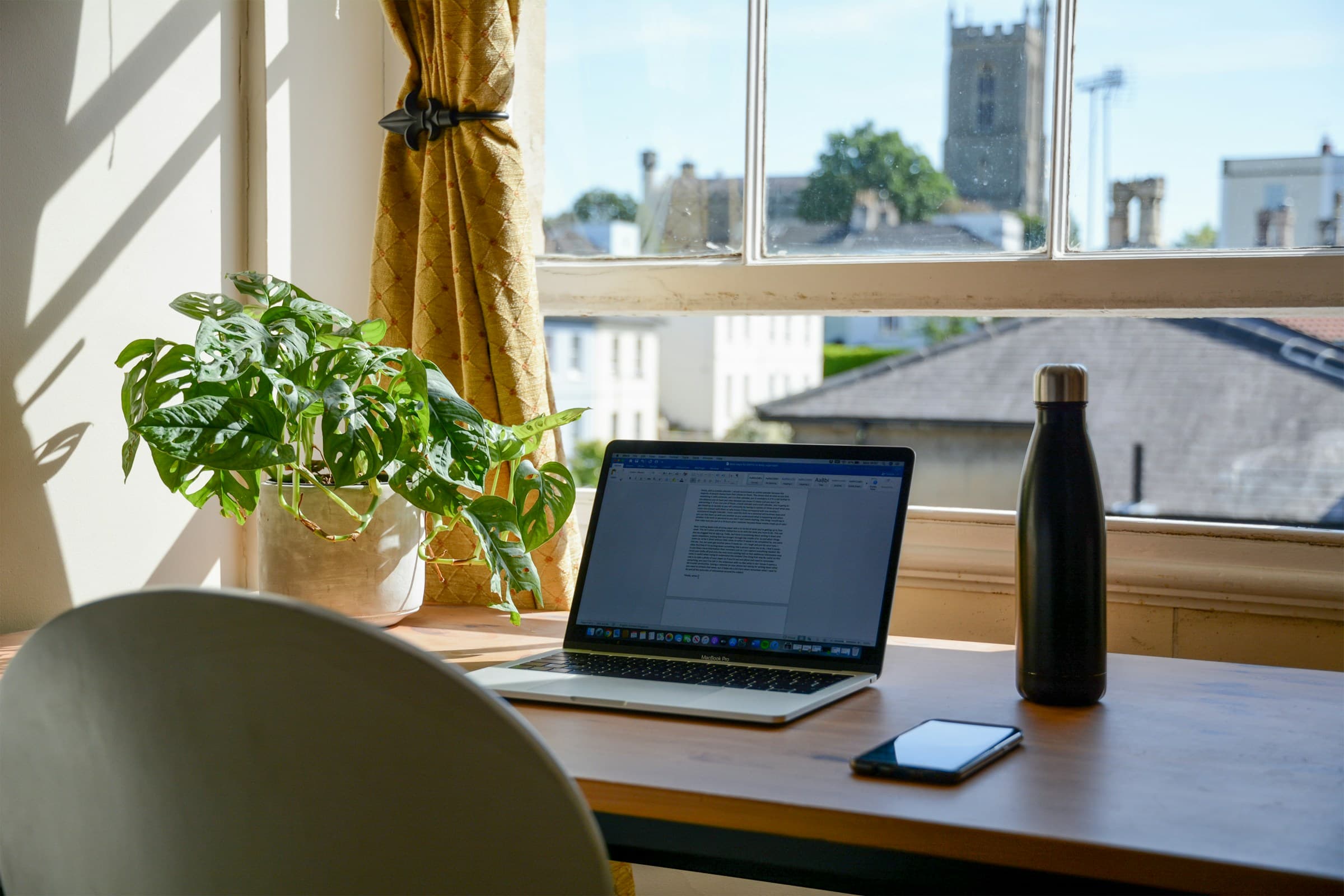
Photo: Mikey Harris / Unsplash
During a heatwave, putting a fan on the desk at 2 p.m. is not enough. The day starts earlier: close shutters and windows before the sun heats the room, move air at the right time, keep water in the work area, and bring forward the tasks that need the most attention.
Santé publique France notes that high heat can cause unusual fatigue and reduced alertness. INRS adds that, for sedentary work, 30 °C can be used as a prevention reference, while making clear that air temperature is not the whole story. Humidity, air movement, solar radiation, effort, and breaks matter too.
01. Treat the room before the desk
Start with the window. Service Public relays ADEME guidance: close shutters as soon as the sun hits the window, close windows when outdoor temperature is higher than indoor temperature, then reopen at night if the air is cooler.
In a small apartment, that means thinking about the exposure of each side. Close the sunny side early. On the shaded side, you may create cross-ventilation if the outside air allows it. Opening the room when the air outside is already hotter does not cool it; it lets more heat in.
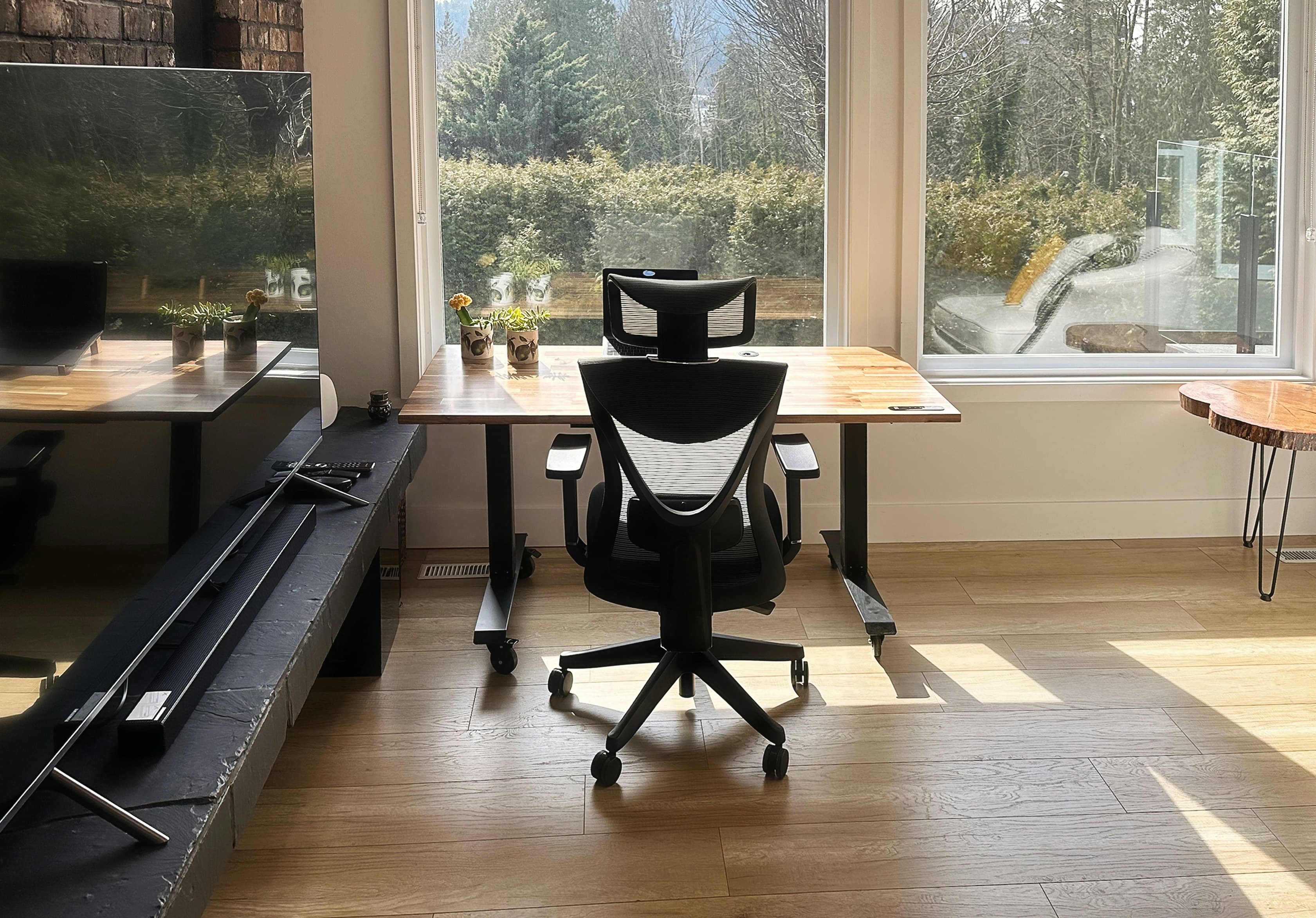
If your desk is pressed against a bright window, move it back temporarily. Solar radiation matters too. A desk away from the glass, a drawn curtain, and a screen out of direct sun often make the day more workable.
Before opening the laptop, touch the table, keyboard, and chair back. If the surfaces are already warm, create shade and adjust the windows before looking at the task list.
02. Move air without inventing cold
A fan can make air feel more bearable on the body. It does not turn a hot room into a cool one. Its value is local: face, neck, and forearms, without sending papers across the desk.
Place it to the side, not straight into the display. Keep cables out of the path, especially if you move between window, desk, and kitchen. If outside air is cooler in the evening or early morning, use that window to flush stored heat. In the middle of the day, a fan in a sun-hit room is a support, not a strategy.
Service Public also mentions misting and hanging a damp cloth in front of an open shaded-side window. These measures may bring brief relief. Shade, cooler air, and breaks still come first.
Santé publique France keeps the advice simple: drink water, wet the body, ventilate, eat enough, avoid physical effort, and avoid alcohol. At the desk, these basics matter more than a pile of gadgets.
03. Put water inside the desk system
At the desk, the rule should stay practical: keep a bottle or glass in view, stable, outside the mouse path, and close enough to reach without thinking.
Do not turn hydration into an anxious dashboard. Public guidance says to drink regularly, before thirst. It does not replace medical advice if you have a treatment, chronic condition, or personal instructions. To keep the habit easy, leave water in view.
Even iced coffee does not replace water. Santé publique France recommends limiting coffee or tea and avoiding alcohol during high heat. Keep coffee as a ritual, not the centre of hydration. For a fuller routine, our guide to the desk hydration system explains where water belongs in the active zone.
04. Move demanding tasks before the heat peaks
During a heatwave, the calendar becomes part of the setup. If your schedule allows it, keep decisions and careful reading for the morning. Put lighter admin, follow-up calls, or mechanical tasks into the hotter hours if you cannot stop.
For heat-exposed work situations, INRS recommends more frequent breaks, less exposure time, reduced physical effort, and access to fresh drinking water. At home, apply the same logic to your own day.
Above 30 °C for sedentary work, INRS considers heat a possible risk and a reference point for starting prevention measures. It does not automatically prohibit work. Use it to reduce intensity, shorten focus blocks, take more breaks, and look for a cooler place if the home no longer works.
Work in shorter blocks and take a real screen-free break. A social-media pause in the same heat and the same chair does not change the workstation. Use that time to change the air, posture, water, or light instead.
05. Reduce screen strain
During hot weather, glare and heat sources at the workstation become more uncomfortable. A laptop in direct sun warms the surface and makes the image harder to read. Turn off what you are not using and keep the computer out of direct sun.
Start by taking the screen out of direct sun. Lower or diffuse natural light. Adjust screen brightness to the room, not the other way around. If you need to close shutters and work in a darker room, indirect light is better than a harsh contrast between a bright display and a black wall.
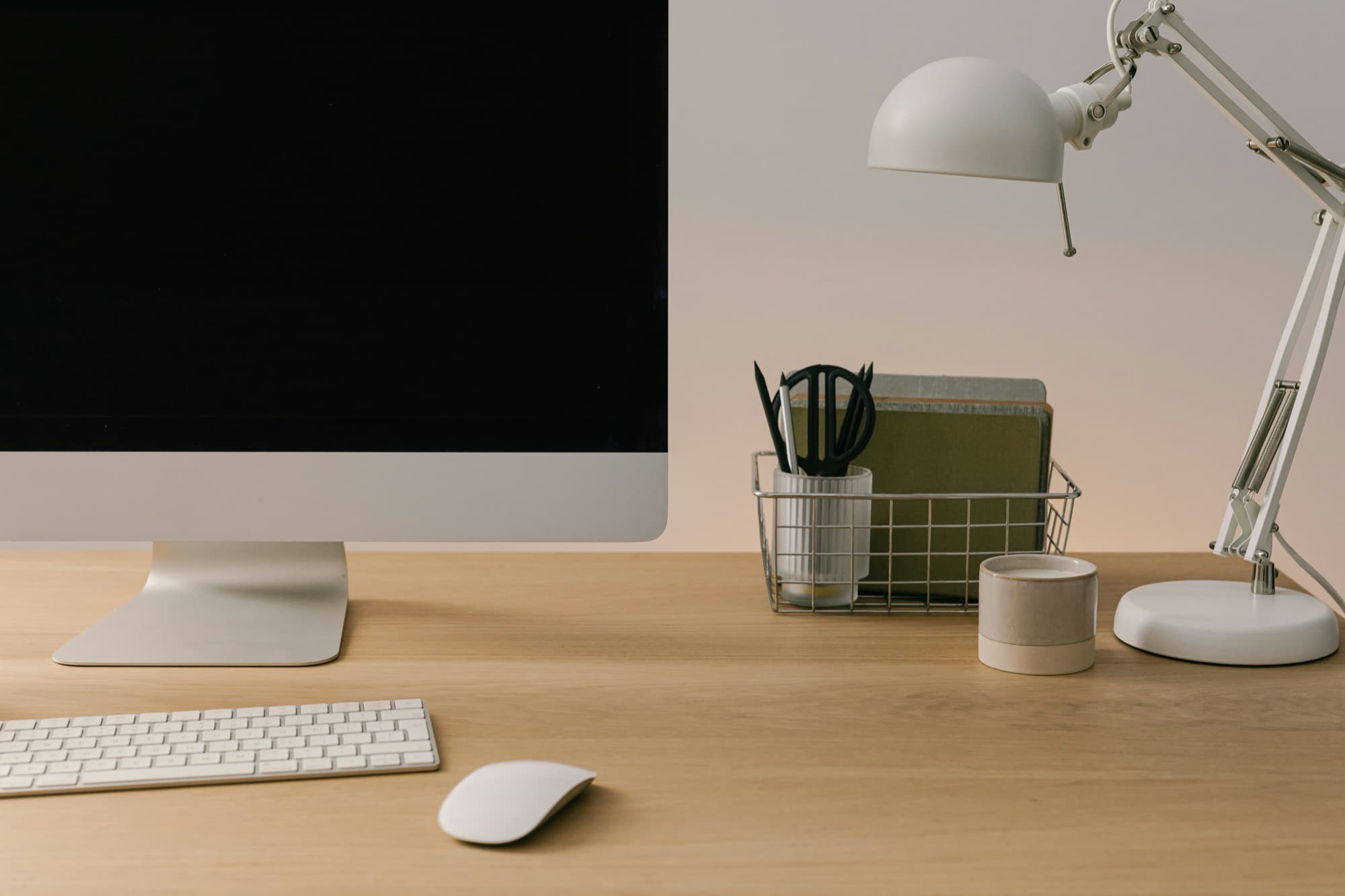
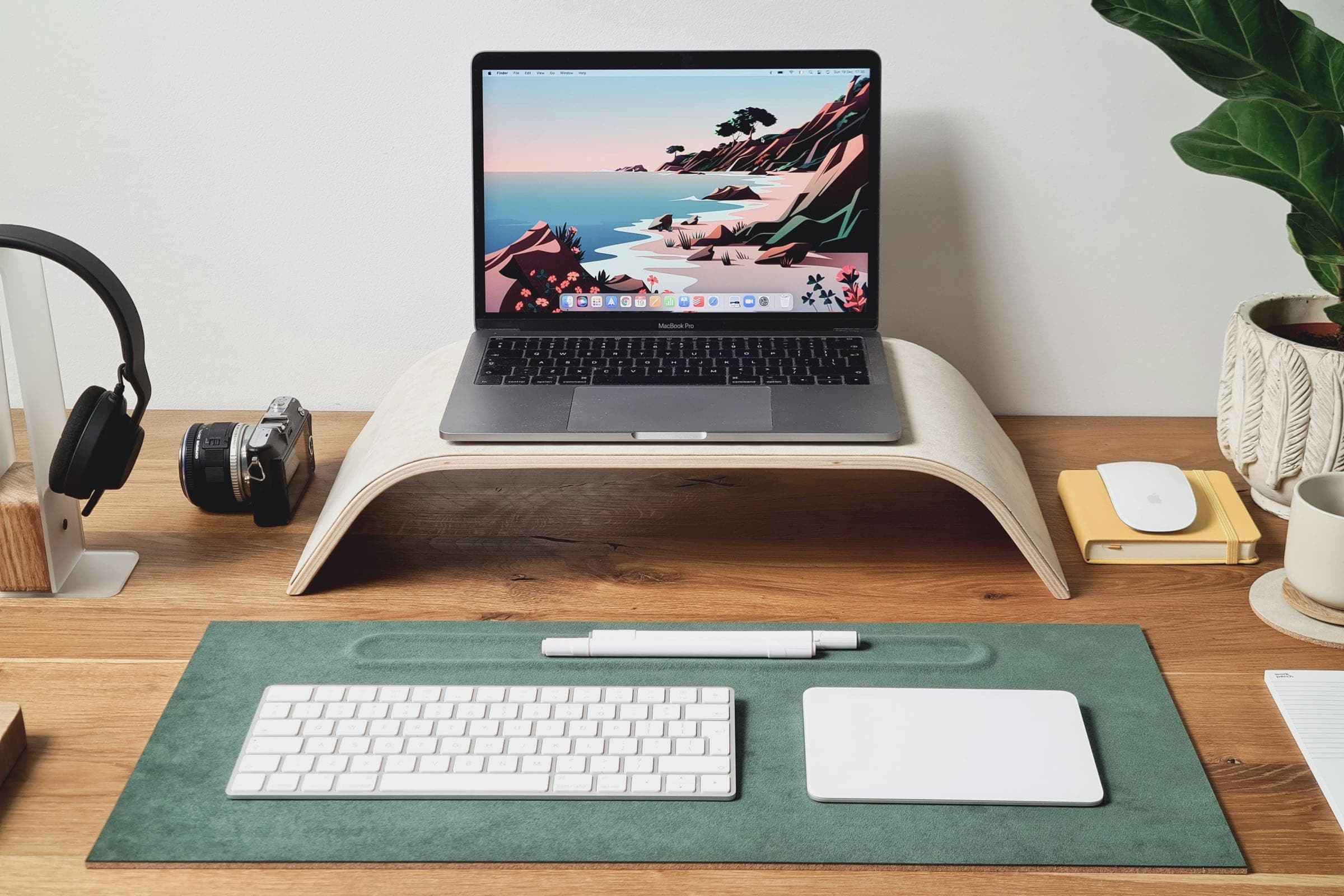
The summer desk is often more bare than the winter desk. Fewer objects, fewer light sources, fewer shiny surfaces. For the details of window angle, lamp position, and glare, read our guide to home-office desk lighting.
06. Know when home is no longer the right desk
Remote work can help when office premises are more exposed to heat. The beta.gouv site “Plus frais au travail”, built with ADEME, INRS, ANACT, and Groupe VYV, also notes that the home can be just as exposed.
If your apartment keeps heat overnight, if concentration drops, if air no longer moves, the better choice may be elsewhere: an air-conditioned office, a library, a cool public place, a calm coworking space, or adjusted hours to discuss with your manager. Santé publique France also recommends spending time in a cool place during high heat.
For employees in France, Service Public Entreprendre notes that employers must adapt work organization during intense heat episodes, use technical measures against heat build-up, and increase access to fresh drinking water as much as possible. These duties provide a basis for requesting an adjustment suited to the situation.
If you feel faint or unwell, call 15. If symptoms persist or the situation worries you, seek medical advice.
In practice: six moves for a heatwave desk
Close the sunny side early. Open late if outside air cools. Keep water in the work field without turning hydration into performance. Place the fan to the side. Shift heavy work to the least hot hours. Remove what heats, shines, or clutters.
A bearable desk is not a perfect desk. It is a workstation that asks less of you at the worst moment. Desk organisation cannot change the weather, but it leaves more room for the right gestures. That is also the spirit of our remote-work well-being station: simple objects and routines that remain usable when the day is less comfortable.
Frequently asked questions
What should I do if my remote-work desk goes above 30 °C?
Use 30 °C as an action reference, not as an automatic legal boundary. Reduce intensity, take more breaks, look for a cooler place, and discuss adaptations if you are an employee. INRS notes that risk also depends on humidity, solar radiation, air movement, and activity.
Should I open the windows during a heatwave?
Not always. Service Public recommends closing windows when the outdoor temperature is higher than the indoor temperature, then opening at night to release stored heat if the air has cooled.
Is a fan enough for work?
It can make the air feel more bearable on the body, especially with shade and breaks. It does not replace closing shutters, drinking water, adapting the rhythm, or moving to a cooler place when the home is too hot.
How much should I drink when it is hot at the desk?
Public guidance says to drink regularly, before thirst. Avoid turning this into a universal number: needs vary with health, medication, activity, and environment. If there is a medical question, ask a health professional.
Is remote work always better during a heatwave?
No. It can reduce exposure in some workplaces, but a poorly insulated or sun-exposed home can be harder to bear. Choose the coolest and safest place for the day, not remote work as an idea.
Santé publique France, “Les fortes chaleurs nous concernent tous : adoptons les bons réflexes”, June 17, 2026. santepubliquefrance.fr
Santé publique France, “Quelles mesures pour prévenir les risques liés à la chaleur ?”, Fortes chaleurs, canicule dossier, updated July 22, 2026. santepubliquefrance.fr
Service Public, “Se protéger et protéger ses proches face aux fortes chaleurs”, May 26, 2026. service-public.gouv.fr
INRS, “Travail à la chaleur : Ce qu’il faut retenir”, updated April 26, 2024. inrs.fr
INRS, “Confort thermique dans les bureaux et sobriété énergétique”, updated April 25, 2023. inrs.fr
INRS, “Travail à la chaleur : Mesures de prévention”, updated April 26, 2024. inrs.fr
Plus frais au travail, “Autoriser le télétravail lorsque c’est possible et souhaitable”, beta.gouv site under construction by ADEME and INRS, with ANACT and Groupe VYV. plusfraisautravail.beta.gouv.fr
Service Public Entreprendre, “Chaleur : quelles obligations pour l’employeur ?”, May 27, 2026. entreprendre.service-public.gouv.fr
. Our selection: the fan (Rowenta VU2750) and the carafe (Hydracy, 1.5 L) are now named.