Airing your home office: a practical guide
A routine for fresh air, working ventilation and realistic expectations of a monitor on the desk.
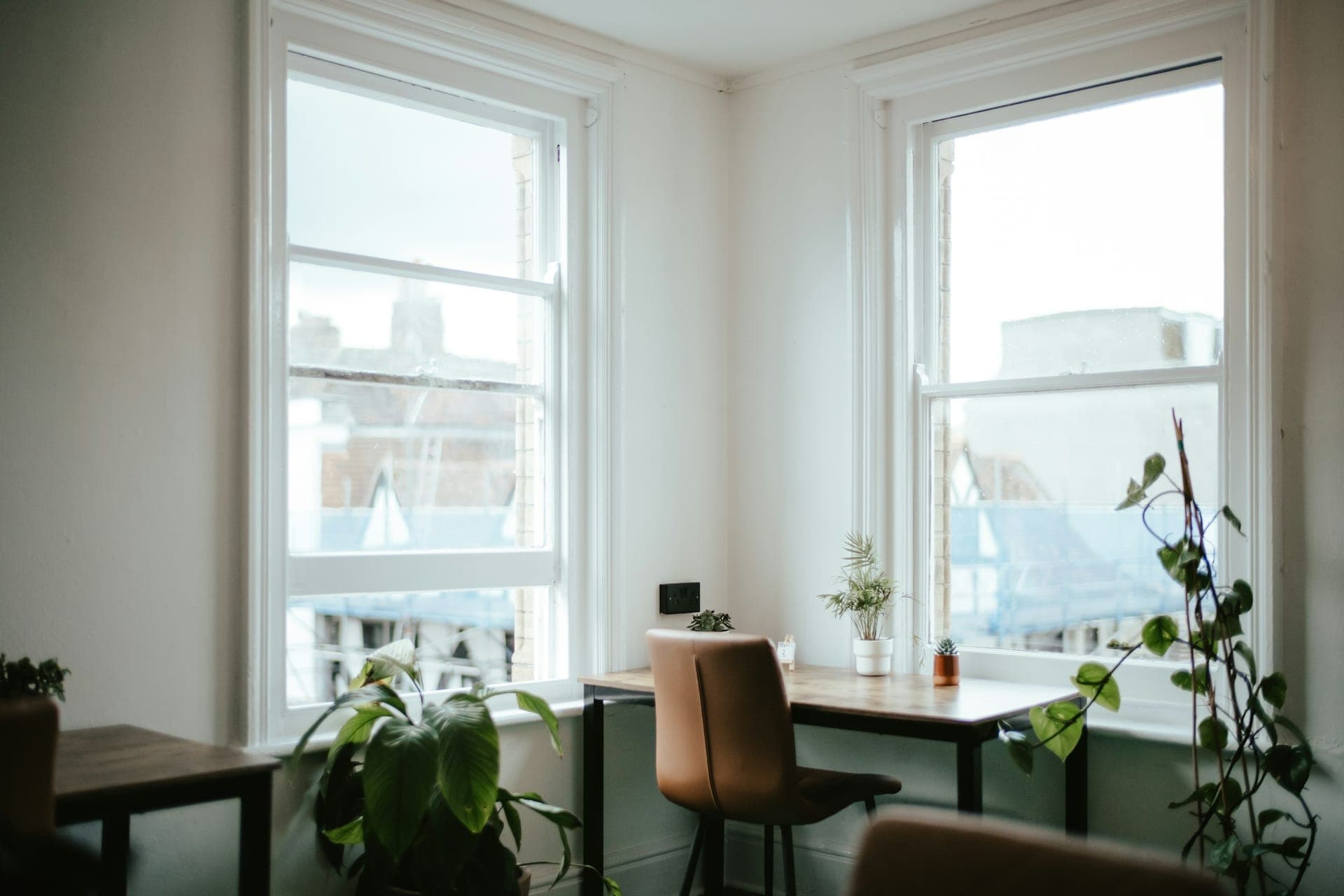
Photo: Annie Spratt / Unsplash
The window stays shut for a meeting, then for the traffic outside. By lunchtime, you have worked for hours without thinking about the room’s air. Airing your home office starts with an ordinary decision: when and how to open the window, and what keeps air moving in and out between those openings.
01. Separate window airing from ventilation
Opening a window replaces air for a limited period. Natural or mechanical ventilation provides ongoing air renewal; France’s environment ministry describes the two as complementary. In a bedroom used as an office, closing the door for work still leaves a reason to check the home’s intended air inlets and outlets.
France’s energy and environment agency, ADEME, recommends opening windows wide for 5 to 10 minutes in the morning and evening, including winter. You could pair those moments with setting up and packing away your desk. That daily starting point does not, by itself, establish adequate ventilation throughout every hour the room is occupied.
Keep vents clear and leave continuous mechanical ventilation running, known as VMC in French homes. A shelf, curtain or tape used to stop a draught must not block an air inlet. Follow the equipment instructions for maintenance. If it becomes unusually noisy or you doubt it is working, have the system checked rather than switching it off.
02. Look at what happens in the room
Furniture, cleaning products and domestic activities can release pollutants, the ministry notes. Before adding a device to the desk, consider what you could avoid: burning incense while working, using several room fragrances or doing work with products that release pollutants beside an occupied workstation.
ADEME also recommends airing after cleaning, cooking or DIY. A pleasant scent is not evidence of healthy air. In a shared living room, agree on a time for those activities and for opening the windows, much as you would for a meeting.
If damp patches or mould keep returning, investigate the cause. France’s occupational safety institute, INRS, identifies leaks and water ingress among the possibilities; opening windows more often cannot repair them. Note where and when the patches appear, then ask an appropriate professional or the person responsible for the property to assess them.
03. Give the monitor a specific question
INRS describes CO₂ in an occupied room as an indicator of air renewal. If you already own a monitor, a useful question is how its readings change while the room is occupied, taking window opening and ventilation into account.
The UK Health and Safety Executive recommends repeated readings during the day and notes their limitations with few occupants or frequently changing numbers. A single reading, even a low one, does not demonstrate safe air. This ventilation clue cannot replace identifying pollutants or investigating a building fault.
An air purifier addresses a different question again. The US Environmental Protection Agency explains that filtration can supplement source reduction and ventilation, but cannot remove every pollutant. A monitor or filter need not be the starting condition for the practical changes already available in your home.
04. Fit the routine around outdoor conditions
A polluted street calls for attention to timing. During a pollution episode, ADEME advises airing when outdoor pollution is lower. Check local information and follow any specific instructions from the authorities. Weather, safe window access and the building’s ventilation also matter; one fixed timetable will not suit every home.
During hot weather, coordinate air renewal with keeping heat out, covered in our guide to working from home in a heatwave. For a desk in the living room, our reversible desk routine helps you keep a route to the window when packing away.
When you next start work, check that access, the unobstructed vents and your intended time to open the window. If the same problem returns despite the routine, keep your observations for an assessment of the room and its ventilation.
French environment ministry, “Qualité de l’air intérieur”, 24 April 2025
ADEME, “Comment respirer un air sain chez soi ?”, 20 November 2025
ADEME, “Pourquoi faut-il aérer son logement tous les jours ?”, 19 November 2025
INRS, “Qualité de l’air intérieur”, 19 March 2024
Health and Safety Executive, “Using CO2 monitors”
US EPA, “Air Cleaners and Air Filters in the Home”, 3 August 2026