Working from home with noise: what to change first
Match the change to the sound, the task and the people sharing your space.

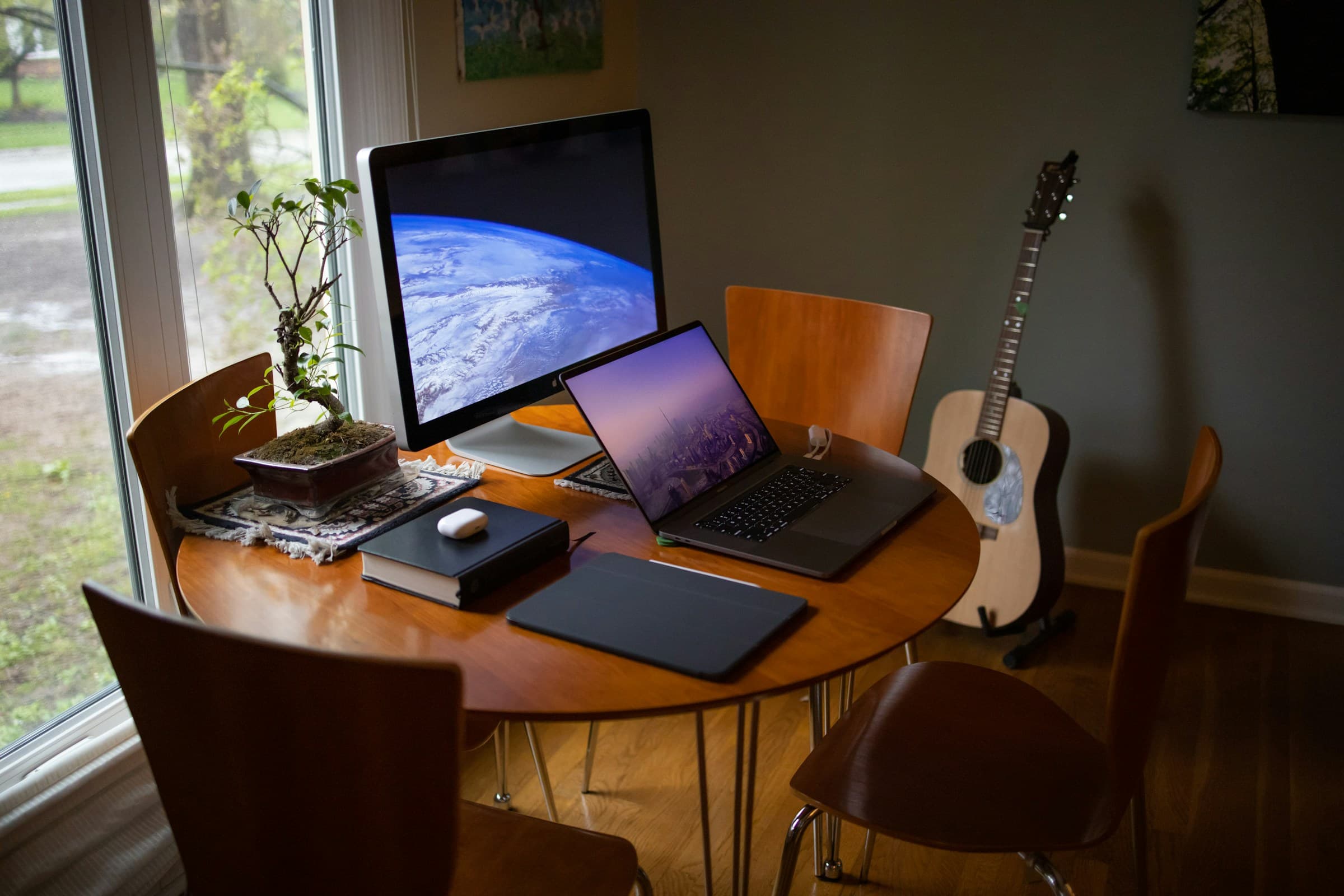
Photo: Julio Lopez / Unsplash
You reread the same sentence while a conversation carries on across the living room. Later, a colleague hears your dishwasher during a call. The two problems sound similar, but they may need different changes.
The French occupational safety institute INRS included everyday workplace noise in its 2026 prevention campaign. At home, the practical aim is to find workable conditions for everyone while allowing the household to carry on with its day.
01. Identify the sound that breaks your concentration
During an ordinary day, note the moments when you lose your place: which sound, which task, and what could you change? Understandable speech while writing, a steady hum and a sudden impact are different problems. Note whether the disturbance affects you or is something people on your calls mention.
In a laboratory study presented in 2017, Kostallari and colleagues asked 55 adults to perform a working-memory task with different levels of speech intelligibility. Intelligibility affected performance. The finding helps explain why conversations deserve attention; it does not measure your productivity at home or the benefit of a headset.
Then choose a specific situation to improve: finishing a proofread during your partner’s call, or being understood without repeating yourself in a meeting. Finding it easier to stay with that task is a more useful reference point than expecting complete silence.
02. Adjust the household routine before buying equipment
In its office guidance, INRS recommends moving noisy activities away from workstations and agreeing on communication rules. Our practical adaptation for home is to schedule laundry outside an important meeting, take a call in another room when one is available, or agree on a period for reading and writing.
Make the agreement specific and fair to everyone. Share the calls that are difficult to move, and give quiet periods a clear ending. If a room can be closed off, try using it for the task in question. Keep a simple way for someone at home to get your attention when needed. Choose an appropriate place for sensitive conversations: a headset does not hide your own speaking voice from people nearby.
If the room sounds echoey, distinguish absorption from sound insulation. INRS describes absorbent wall treatments and partitioning as different interventions. A decorative panel sold as “acoustic” is not evidence that it will block sound from next door. For persistent noise between homes, have its route identified before committing to building work. If your workstation also needs to pack away, our guide to a reversible living-room workspace covers that part of the arrangement.
03. Separate listening from microphone capture
For listening, headphones with active noise cancellation may be worth considering for a continuous background sound. Check their limitations against the noise that actually bothers you. Sony says the WH-CH720N’s cancellation is more effective at low frequencies than for human voices. You may still understand a nearby conversation. Do not choose this model expecting speech to disappear.
For calls, look at the microphone and its position. The Logitech H390 USB-A has an adjustable boom and an inline mute control; its noise-reduction claim concerns voice capture. That serves a different purpose from active cancellation at your ears. Check the port on your computer and select the intended microphone in your meeting app.
Try the equipment you already own before replacing it. Use your app’s audio test, or make a local recording without work content, to hear what is actually being transmitted. Compare an ordinary sentence with and without the available noise-reduction setting. Check that your voice remains intelligible too. Fit deserves a trial: headphones that squeeze or cut you off from the household at the wrong moment do not suit your day.
04. Keep the change that helps
Across a few ordinary days, change one thing: when an appliance runs, where you take a call, or the equipment you use for a task. Note the noise that remains and how easily you return to work. This personal comparison helps you judge comfort; it is not a scientific productivity measurement.
If speech still intrudes, revisit the room arrangement and shared schedule before adding equipment. If only the sound sent to colleagues is a problem, continue adjusting the microphone. You can keep one arrangement for writing and another for speaking without wearing headphones all day.
INRS, workplace noise prevention campaign, 2 June 2026 (French)
INRS, reducing noise in offices, ED 6472, March 2022 (French)
INRS, noise prevention methods, 26 October 2022 (French)
Sony WH-CH720N help guide: noise-cancellation limitations (French)
Logitech H390 headset specifications (French). Sources accessed 13 September 2026.